
What Is Water Used For?
- One Sand pixel touching one Water pixel becomes two Wet Sand pixels.
- One Seed pixel touching one Water pixel becomes one Wet Seed pixel, absorbing the Water.
These interactions consume Water, so a production line can drain a reservoir even when the source appears steady.
Water Sources in Sandustry
Surface Lakes and Underground Deposits
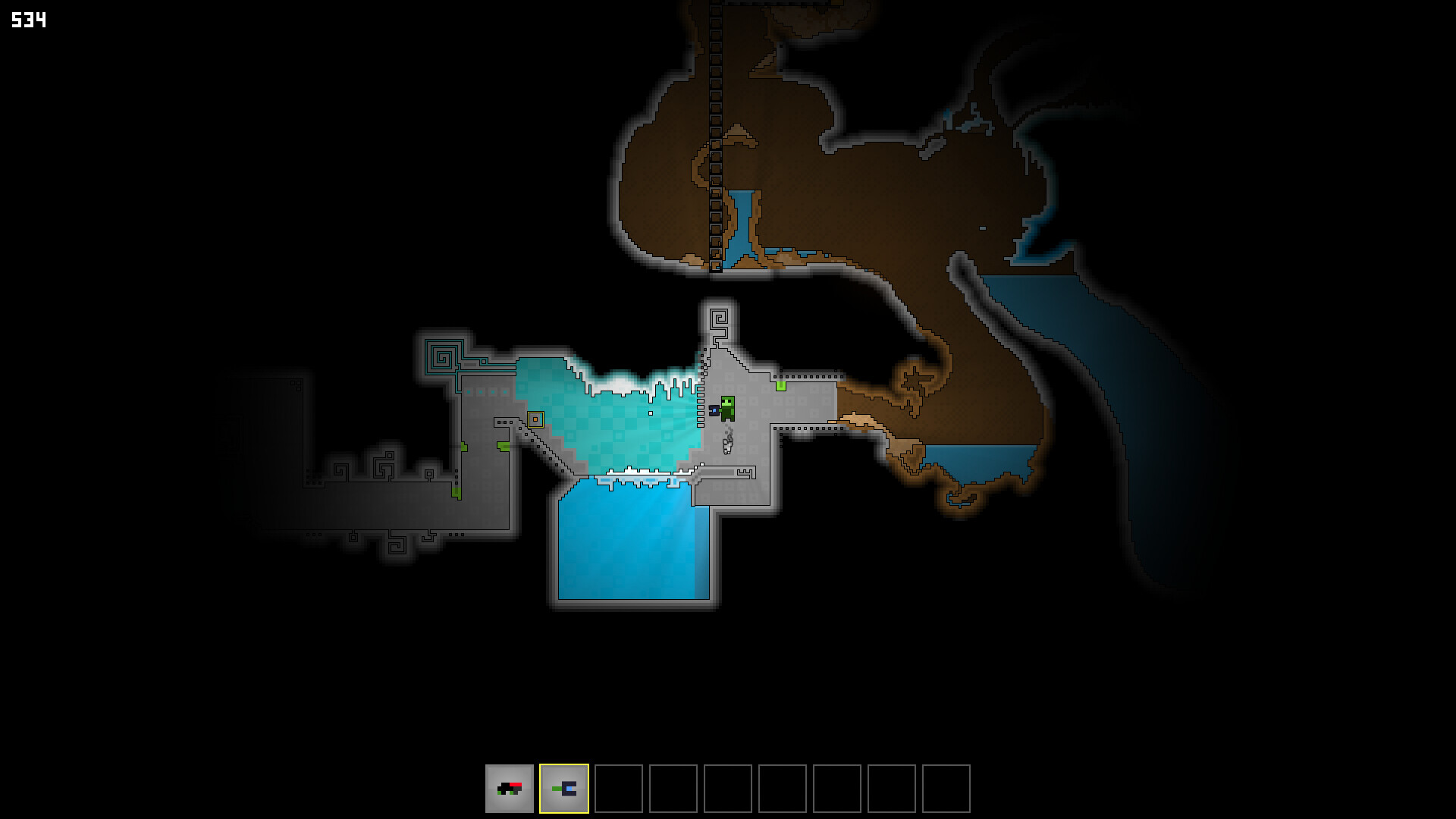
Natural pools are the most direct source. Water appears in surface lakes and underground deposits.
Melting Ice
Ice can be melted into Water and used as a backup when renewable output cannot keep pace.
Steam and Rain
Steam that reaches the sky returns as Rain, which can be collected and routed into storage.
Lumlings
Lumlings can support a renewable supply when kept above the reservoir waterline.
Condensers
Players also use Condensers to turn Steam into Water, but no standard layout or conversion ratio is confirmed here.
How the Water System Works
Pooling and Evaporation
Water spreads through a depression until it forms a flat pool. A loose droplet that does not reach a depression within 45 seconds disappears.
Blocks, Filters, and Corner Leaks
Blocks, Conveyor Belts, Kinetic Presses, and Flux Emanators stop Water. Normal Filters let it pass, while Advanced Filters can affect liquids. Water can also slip through the meeting point of two block corners.
Pumps, Vents, and Height
Community setups place the Pump near the bottom of a reservoir. Players also report that a Liquid Vent will not release Water higher than the Vent itself.
How Steam Turns Back Into Water
Steam can return to Water in two supported ways:
- Let Steam reach the sky, where it becomes Rain.
- Send Steam through Condensers to create Water.
A Temporary Early Water Refill Route
When a small early reservoir runs low, one Early Access playthrough uses Snow, Water vapor, and Rain to return Water to the same collection area.
- 01
Make Snow with the Cryoblaster
Use the Snow as the input for a temporary refill route.
- 02
Heat the Snow
A Flamethrower can turn the Snow into Water vapor.
- 03
Guide the vapor upward
Let it reach the sky, where it can return as Rain.
- 04
Funnel the Rain back to storage
Collect the wider Rain fall into your existing Water area instead of letting it spread through the factory.
How to Maintain a Stable Water Supply
- 01
Choose a primary source
Use a natural pool, Lumlings, Ice, or a Steam conversion system.
- 02
Collect the output
Route Water into a sealed reservoir instead of leaving droplets on an open surface.
- 03
Place extraction low
Keep the extraction point near the bottom of the reservoir.
- 04
Route Water to consumers
Avoid corner gaps and blocks that interfere with Water flow.
- 05
Compare supply with demand
Watch the reservoir level while normal production is running.
- 06
Keep a backup source
Stored Ice can cover demand when renewable output falls short.
- 07
Control overflow
Keep excess Water away from unrelated machinery and Lava.
A source can be renewable without producing Water as quickly as the factory consumes it.
Common Water Problems
Loose Droplets Disappear
Give Water a short, enclosed route into a depression. Stray droplets can evaporate after 45 seconds if they never settle.
Water Leaks Through a Wall
Check corners as well as straight walls. Two blocks touching only at their corners may leave a path for liquid.
Lumlings Are Not Producing as Expected
Keep Lumlings above the waterline rather than submerged, with a clear path into storage.
The Reservoir Still Runs Dry
Judge the setup by demand rather than Lumling count alone. Reduce consumption, expand production, or keep a backup.
Water Overflows Into Lava
Water contacting Lava creates Steam. Seal the reservoir and direct overflow away from Lava areas.
Can You Make Infinite Water?
Yes. Lumlings can provide a renewable Water source when held above a collection pool. “Water Generator” is not confirmed as the name of one specific building.